Legal basis (in Polish law)
§ 8. 1. W mds, innym niż wolnostojące mds, o którym mowa w § 13, zapewnia się instalacje lub przyłącza instalacyjne umożliwiające dalsze rozprowadzenie instalacji lub podłączenie urządzeń, służące do:
…
3) wentylacji i utrzymania w czasie schronienia nie krótszym niż 48 godzin stężenia objętościowego tlenu wynoszącego co najmniej 18 % oraz dwutlenku węgla nie większego niż 2,0 %;
…
§ 13. 1. Wolnostojące mds jest przeznaczone na krótkotrwałe przebywanie osób do 4 godzin. Dopuszcza się przeznaczenie wolnostojącego mds na przebywanie osób powyżej 4 godzin, jeżeli jest wyposażone w urządzenia i instalacje, o których mowa w § 8, w zależności od jego przewidywanej pojemności, oraz są w nim miejsca do siedzenia, odpoczynku lub spania.
…
§ 4. 1. Czynności związane z utrzymaniem budowli ochronnej w należytym stanie technicznym obejmują:
…
5) monitorowanie środowiska w pomieszczeniach, w tym dokonywanie pomiarów temperatury i wilgotności oraz utrzymywanie określonych warunków temperatury i wilgotności w celu uniknięcia korozji i rozwoju pleśni;
…
§ 6. 1. Kierownik budowli ochronnej w czasie użycia budowli ochronnej:
…
4) podejmuje decyzję o uruchomieniu instalacji zapewniającej warunki bezpiecznego schronienia, w tym instalacji wentylacyjnej wraz z częścią filtrowentylacyjną lub pochłaniaczami regeneracyjnymi oraz oświetlenia podstawowego i awaryjnego w przypadku ręcznego jego przełączania po zaniku zasilania podstawowego;
Detected substance
- Substance:
- carbon dioxide (CO2) §
- Hazard:
- asphyxiation
- TWA (time-weighted average):
- 0.5 %v/v
- STEL (short-term exposure limit):
- 1.5 %v/v
- Relative density (air = 1):
- 1.52
- Substance:
- oxygen ↓ (O2) §
- Hazard:
- hypoxia
- Relative density (air = 1):
- 1.11
Location of detectors
- In rooms intended for temporary occupancy, evenly distributed throughout the monitored area.
- Away from ventilation air supply openings and vehicle access doors, avoiding dead zones.
- In locations not exposed to direct heat sources or water.
- Detectors should preferably be installed in pairs:
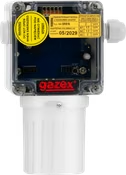
- Carbon dioxide (CO2) detector at a height of 0.5–1.0 m above floor level.
- Oxygen (O2) detector above the carbon dioxide (CO2) detector, at a height not exceeding 1.6 m above floor level.
- At least one pair of detectors (CO2, O2) in each room, with each pair covering a monitored area of no more than approximately 500 m2.
Standard configurations of gas detection systems
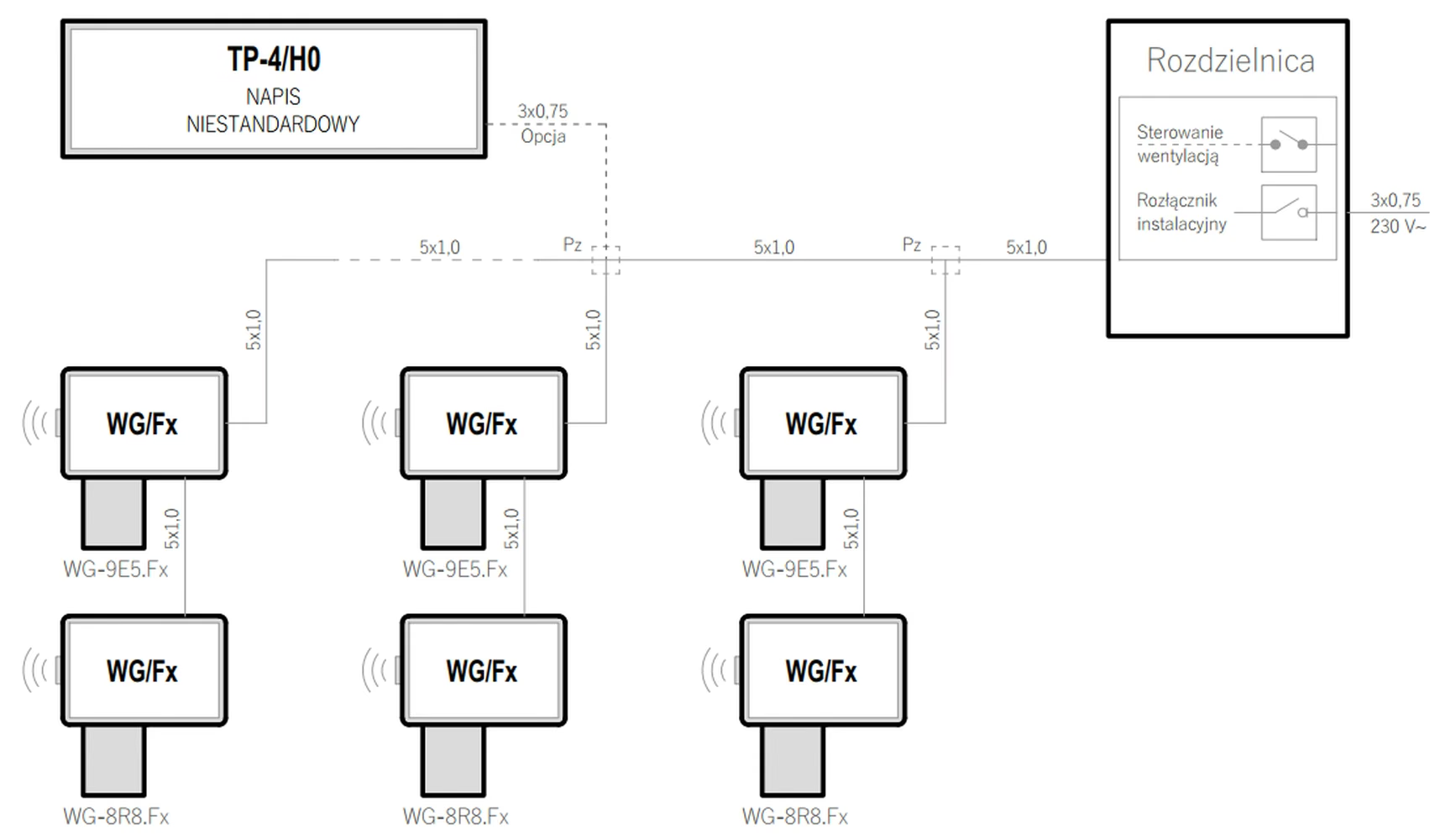
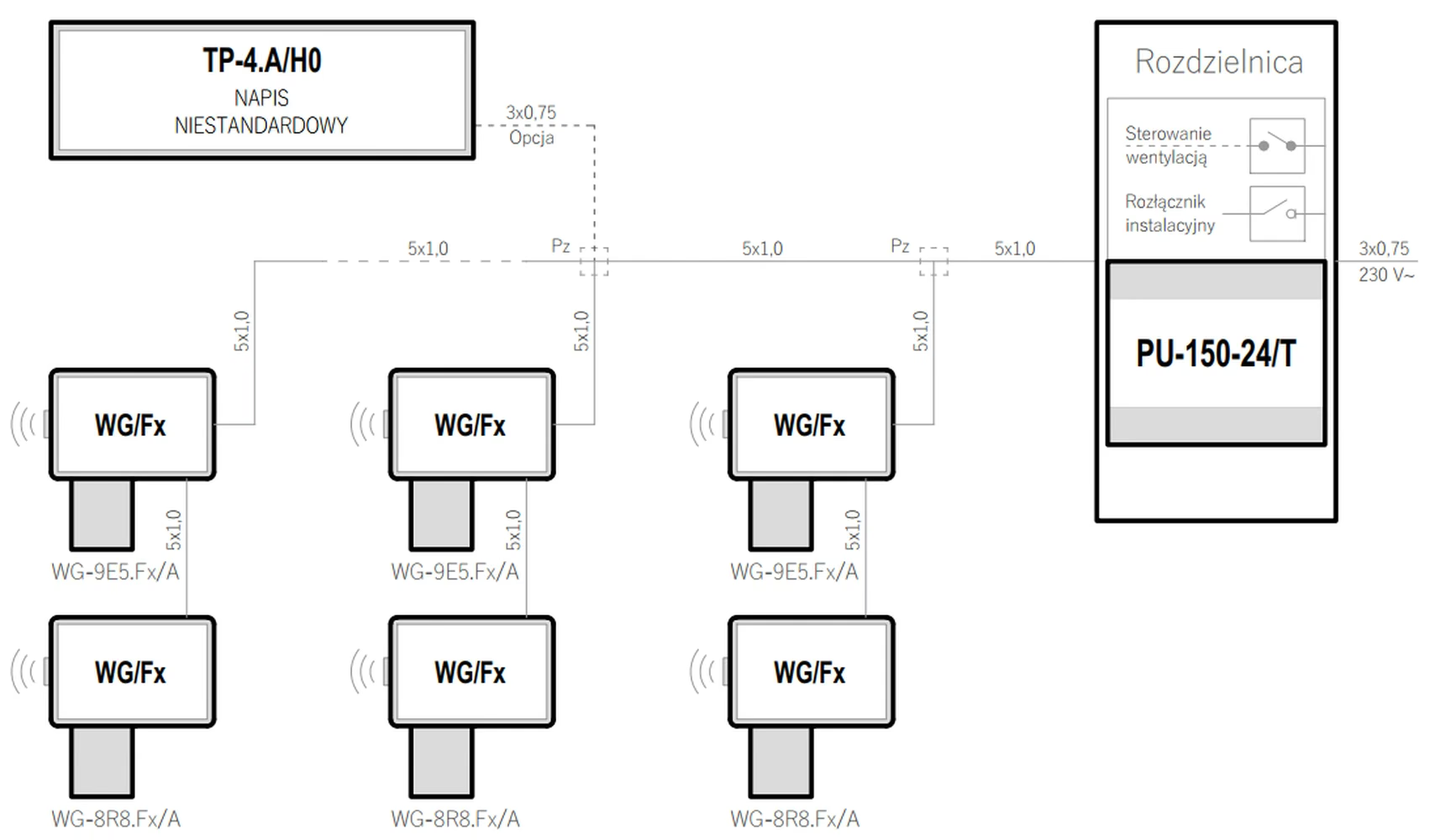
- System topology
- Serial (linear)
- Supply voltage
- 230 V AC
- Maximum number of gas detectors
- ∞
- Emergency power backup
- —

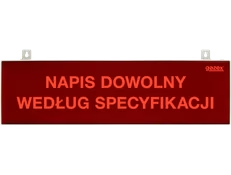
- System topology
- Serial (linear)
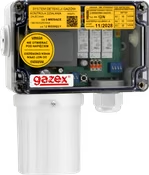
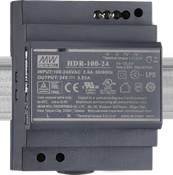
- Supply voltage
- 24 V DC
- Maximum number of gas detectors
- ∞
- Emergency power backup
- —


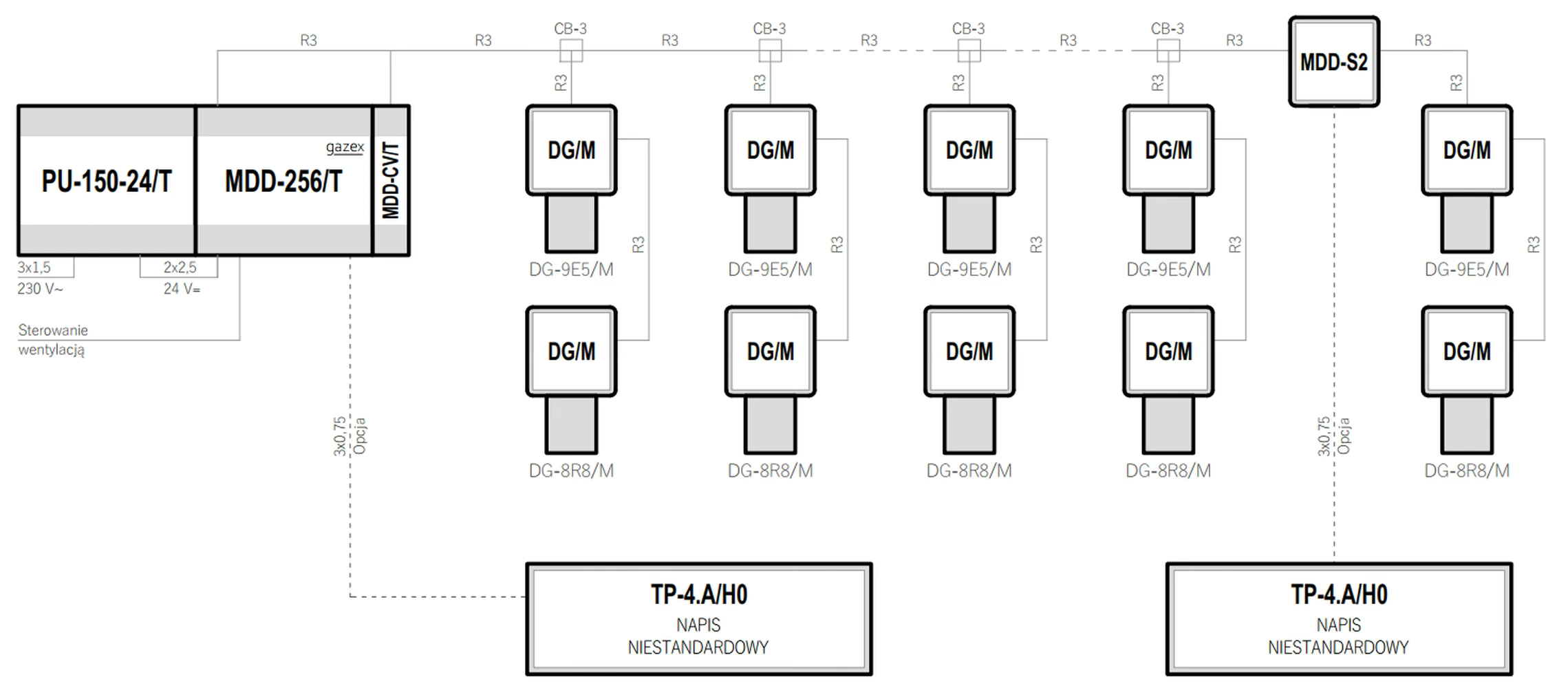
- System topology
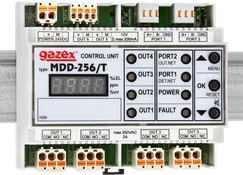
- Bus
- Supply voltage of the control unit
- 24 V DC
- Control unit
- MDD-256/T
- Maximum number of gas detectors
- 224
- Emergency power backup
- —

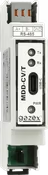
Legal basis (in Polish law)
Rozdział 4
Wymagania w zakresie pojemności i powierzchni budowli ochronnej
§ 6. 1. Pojemność budowli ochronnej, oznaczającą maksymalną liczbę osób, która może przebywać w budowli ochronnej, ustala się, uwzględniając:
…
2) bezpieczeństwo chronionych osób, w tym:
a) dostępność powietrza w budowli ochronnej – przy założeniu, że poziom dwutlenku węgla nie może przekraczać 2 % objętości, a zawartość tlenu nie może być niższa niż 18 % objętości,
…
Rozdział 18
Warunki techniczne użytkowania budowli ochronnych
…
§ 58.2 Budowlę ochronną wyposaża się w następujące urządzenia, które utrzymuje się w należytym stanie:
1) do wykrywania i pomiaru stężeń tlenku węgla oraz dwutlenku węgla w powietrzu – sygnalizatory elektroniczne;
…
§ 63. 1. Bieżąca obsługa budowli ochronnej w okresie gotowości do użycia odbywa się nie rzadziej niż raz w miesiącu, a w pozostałych przypadkach – stosownie do potrzeb. Zakres bieżącej obsługi obejmuje:
…
2) okresowe uruchamianie urządzeń, pomiary temperatury i wilgotności, sprawdzenie stanu higieniczno‑sanitarnego oraz wentylacji;
§ 4. 1. Czynności związane z utrzymaniem budowli ochronnej w należytym stanie technicznym obejmują:
…
5) monitorowanie środowiska w pomieszczeniach, w tym dokonywanie pomiarów temperatury i wilgotności oraz utrzymywanie określonych warunków temperatury i wilgotności w celu uniknięcia korozji i rozwoju pleśni;
…
§ 6. 1. Kierownik budowli ochronnej w czasie użycia budowli ochronnej:
…
4) podejmuje decyzję o uruchomieniu instalacji zapewniającej warunki bezpiecznego schronienia, w tym instalacji wentylacyjnej wraz z częścią filtrowentylacyjną lub pochłaniaczami regeneracyjnymi oraz oświetlenia podstawowego i awaryjnego w przypadku ręcznego jego przełączania po zaniku zasilania podstawowego;
Detected substance
- Substance:
- carbon dioxide (CO2) §
- Hazard:
- asphyxiation
- TWA (time-weighted average):
- 0.5 %v/v
- STEL (short-term exposure limit):
- 1.5 %v/v
- Relative density (air = 1):
- 1.52
- Substance:
- carbon monoxide (CO) §
- Hazard:
- toxic effect
- LEL (lower explosive limit):
- 12.5 %v/v
- TWA (time-weighted average):
- 20 ppm
- STEL (short-term exposure limit):
- 100 ppm
- Relative density (air = 1):
- 0.97
- Substance:
- oxygen ↓ (O2) §
- Hazard:
- hypoxia
- Relative density (air = 1):
- 1.11
Location of detectors
- In rooms intended for permanent occupancy.
- Away from ventilation air supply openings.
- In locations not exposed to direct heat sources or water.
- Detectors should preferably be installed:
- Carbon dioxide (CO2) detectors at a height of 0.5–1.0 m above floor level.
- Oxygen (O2) and carbon monoxide (CO) detectors at a height not exceeding 1.6 m above floor level.
- At least one set of detectors (CO, CO2, O2) in each room, with each set covering a monitored area of no more than approximately 200 m2.
Standard configurations of gas detection systems
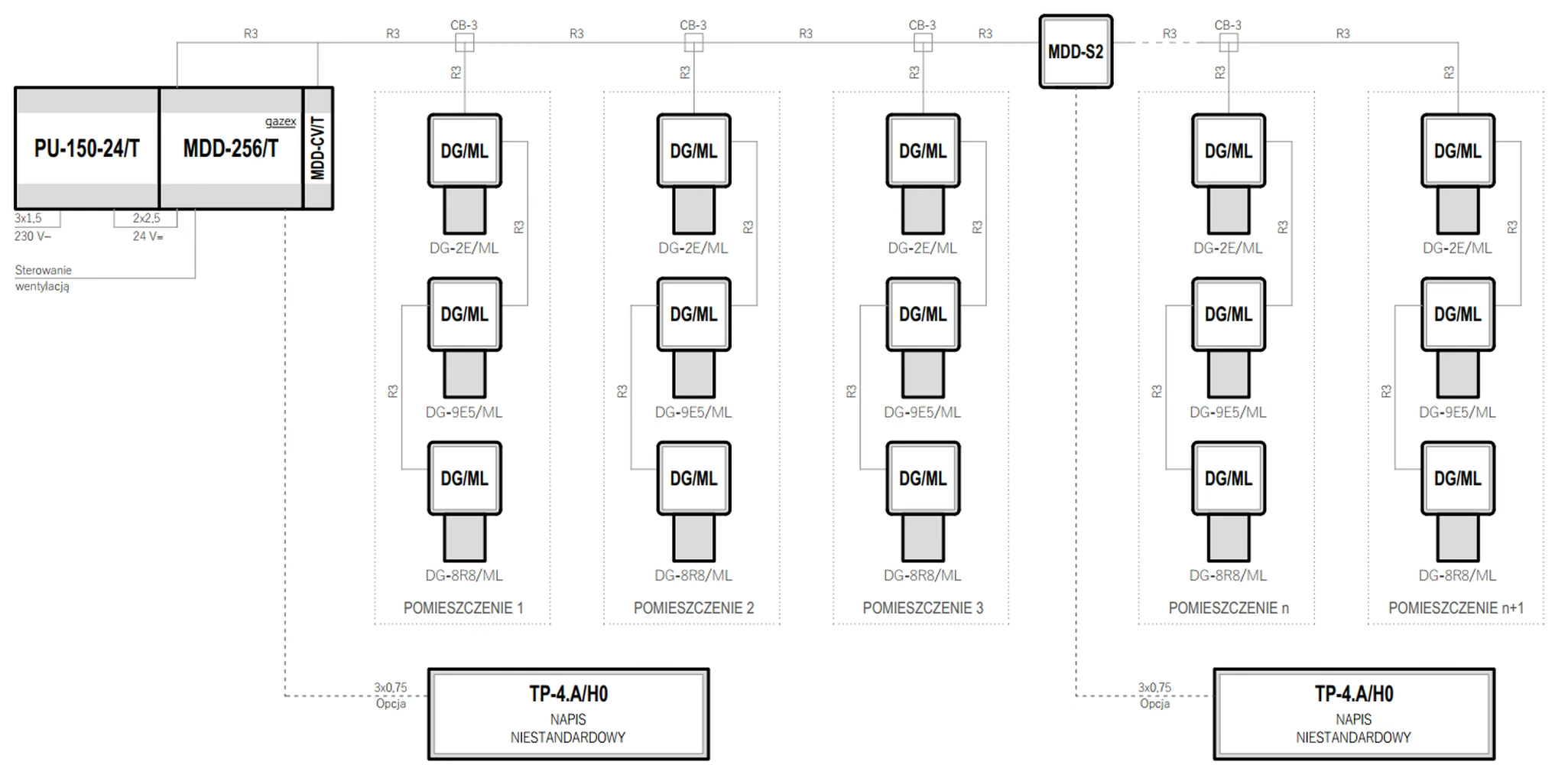
- System topology
- Bus
- Supply voltage of the control unit
- 24 V DC
- Control unit
- MDD-256/T
- Maximum number of gas detectors
- 224
- Emergency power backup
- —